
Search This Supplers Products:square steel piperectangular steel pipeERW steel pipehot galvanized steel pipelsaw steel pipeseamless steel pipe
Is Square Tubing Stronger Than Pipe?
time2026/06/30
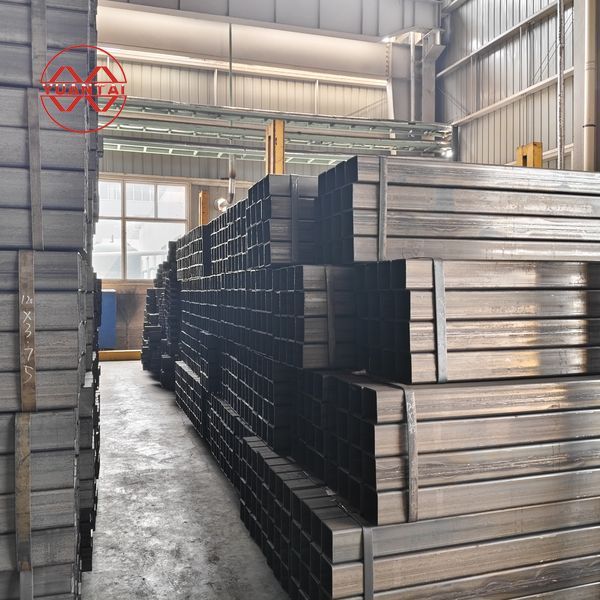
- Engineers and builders often ask this critical question. The answer depends on the type of load. We need to compare their structural properties directly. This article explains the strength differences clearly. We also highlight our superior manufacturing capabilities.
Engineers and builders often ask this critical question. The answer depends on the type of load. We need to compare their structural properties directly. This article explains the strength differences clearly. We also highlight our superior manufacturing capabilities.
Understanding the Core Difference
Square tubing and round pipe serve different purposes. Pipe usually transports fluids or gases. Tubing serves structural roles in frameworks and machinery. This functional difference shapes their design and strength.
Key Factors in Strength Comparison:
1.Shape and material distribution: Square tubing has more material at the corners. This placement provides higher bending resistance.
2.Cross-sectional area: For equal outer dimensions, a round pipe often has a larger area. This helps it handle greater compressive loads.
3.Buckling resistance: Square tubing resists buckling more effectively. Its symmetrical shape offers increased rigidity.
4.Bending direction: Round sections are equally strong in all directions. Square tubing offers maximum strength when the load hits the flat face.
Analyzing Bending Strength
The section modulus measures a beam's bending strength. A higher modulus means better performance. Square tubing generally has a higher section modulus than round pipe. For example, a 6-inch square tube with a 0.250-inch wall has a section modulus of 10.1 in³. A 6-inch Schedule 40 pipe (0.280-inch wall) has a modulus of only 8.50 in³. This makes the square tube stronger in bending.
Analyzing Torsional Strength
Torsional strength relates to resisting twisting forces. Round pipes perform better here. Their continuous circular shape distributes stress evenly. Square tubing concentrates stress at the corners. Yet, modern engineering often favors the square shape for its structural stability. Many frameworks use square tubes for this reason. They are also easier to connect and assemble.
Why Square Tubing Excels in Construction:
(1)Ease of assembly: The flat sides simplify joining and welding.
(2)Improved stability: The square shape offers stable support for columns and beams.
Material efficiency: It provides a great strength-to-weight ratio.
Our Manufacturing Expertise
Yuantai Derun is a leading China steel pipe manufacturer. We are a top global steel company. We drive innovation in square tubes and structural steel pipes. Our commitment is to a greener future. We deliver high-quality products and services. We promote the wider use of structural steel pipes globally.
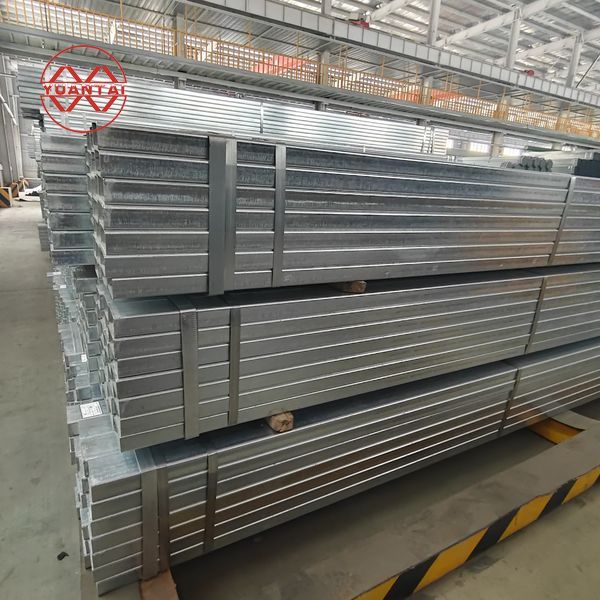
Our product range is extensive. We produce black square tube and galvanized square pipe. We manufacture these under strict quality controls. Our square tubes use high-grade structural steel like S355JR and Q235B. They exhibit excellent wear resistance. They offer high tensile strength (470-630 MPa). They also have superior yield strength (≥355 MPa). These optimized dimensions ensure an optimal strength-to-weight ratio. This enhances structural stability while maintaining handling efficiency.
Quality and Global Standards
Our certifications demonstrate our commitment to excellence. We hold ISO9001, ISO14001, and OHSAS18001 certifications. We are also certified to EU CE (10219/10210), BV, JIS, DNV, ABS, and LEED standards. These accreditations underscore our global compliance. They prove our quality excellence.
Our Certifications Include:
① ISO9001: Quality control system certification.
② EN10219/EN10210: European standard certifications.
③ BV, DNV, ABS: Classification society certifications.
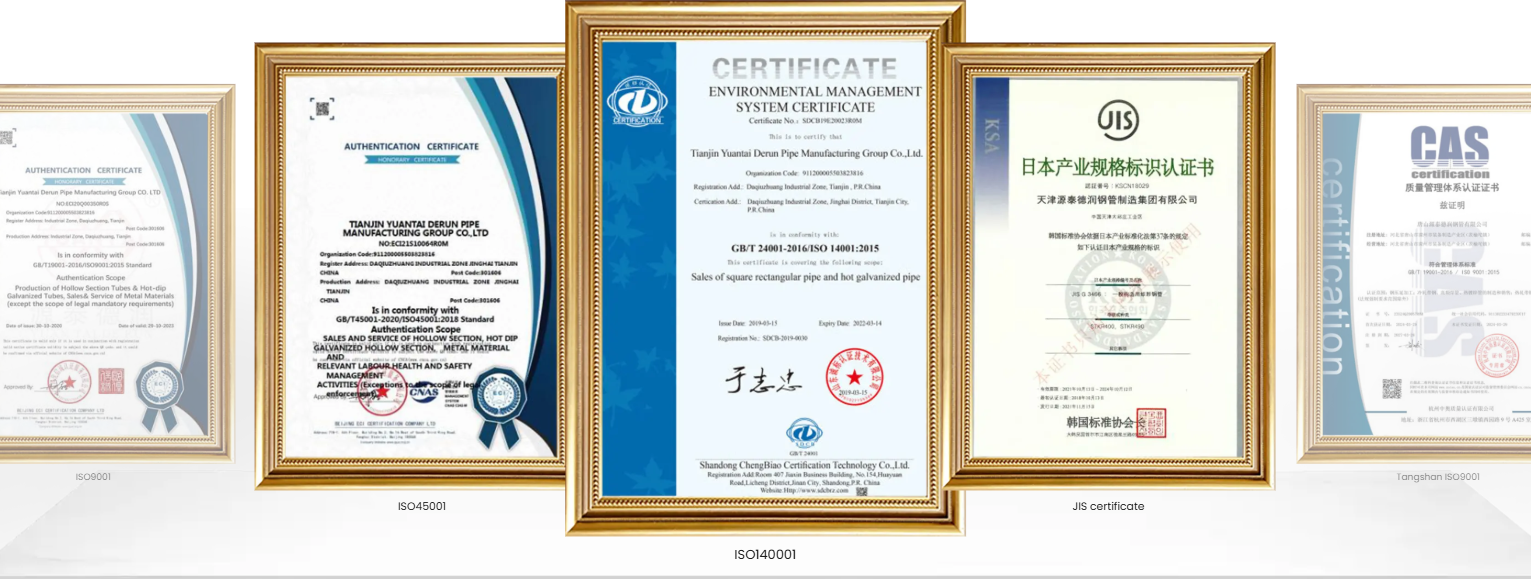
These standards guide our entire production process. We source our raw materials from HBIS, Baosteel, and TPCO. These are state-owned mills. This ensures the steel meets global standards.
Our Production Capabilities
Our manufacturing facilities are among the largest in the world. We have 65 ERW/HFW pipe lines at our disposal. We operate 26 galvanizing lines and 10 pre-galvanized lines. We also have advanced JCOE/LSAW/SSAW capabilities. Our product dimensions are extremely versatile.
Product Size Range:
1.Square pipes: 10×10×0.5 mm to 1000×1000×60 mm.
2.Rectangular pipes: 10×15×0.5 mm to 800×1200×60 mm.
3.Circular pipes: Ø10.3 mm to 2032 mm, with wall thicknesses up to 80mm.
We hold over 100 patents. This shows our dedication to innovation. Our processes include ERW, HFW, LSAW, SSAW, and hot/cold forming. These advanced methods ensure precision and durability. We are a premier choice among steel pipe manufacturers worldwide.
Product Applications and Benefits
Our square steel tube is a standard stock item. It complies with ASTM, EN, and GB standards. This ensures reliability for diverse engineering applications.
Common Applications Include:
1.Construction frameworks: For buildings and infrastructure.
2.Industrial machinery: For robust equipment frames.
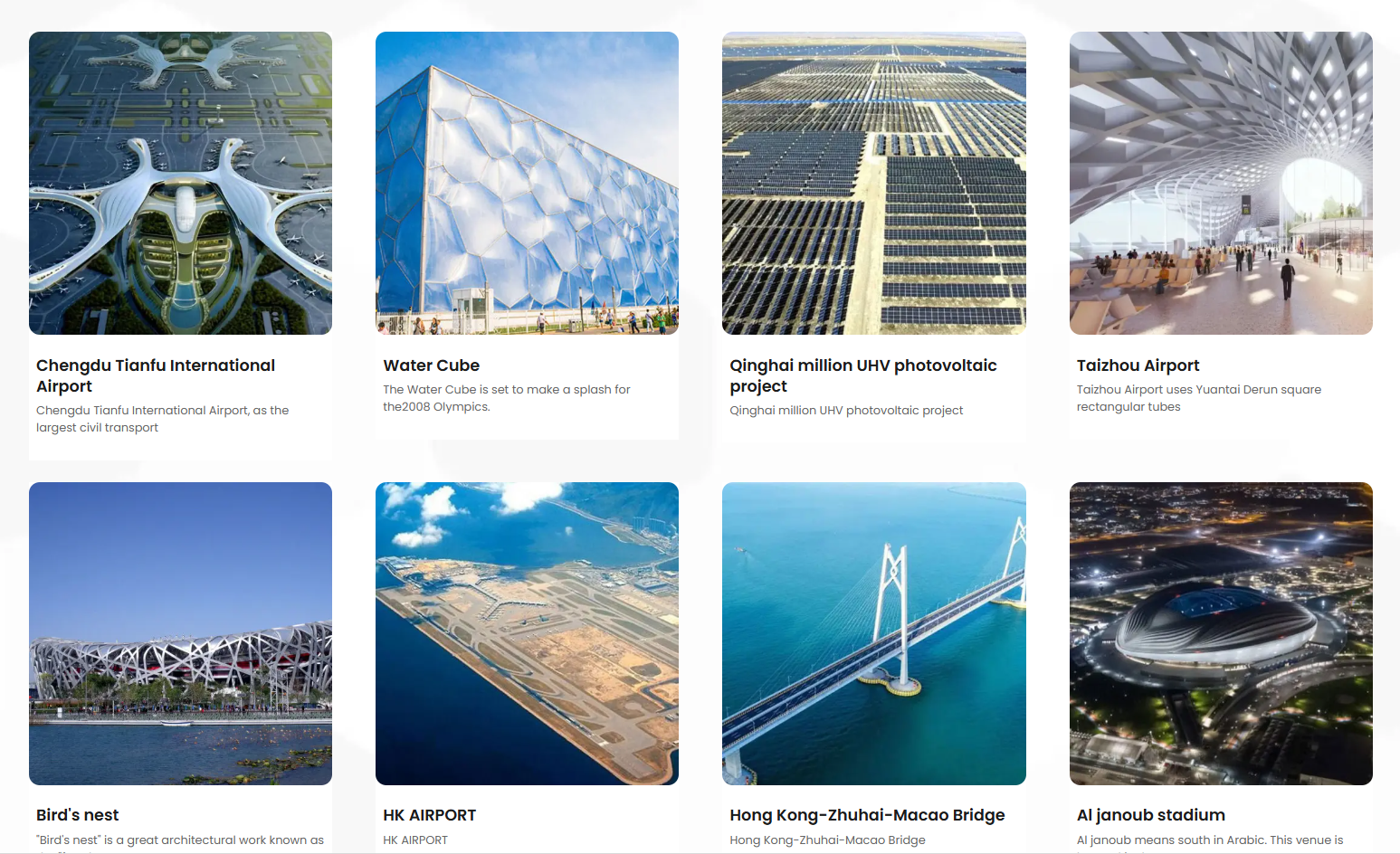
3.Infrastructure projects: For bridges and support structures.
Our tubes are welding-friendly. We offer them in galvanized or painted finishes. This protects against corrosion and extends service life. Our advanced "round-to-square" forming line prevents cracking. It ensures stable shaping and improved precision. This technology is industry-leading.
Conclusion and Service Commitment
Square tubing is often stronger than pipe in bending. It is a superior choice for structural frameworks. It offers a higher strength-to-weight ratio. It provides easier assembly and greater stability. However, the right choice always depends on your project's specific needs. Consider the loads and application.
We invite you to explore our superior product range. We are committed to your success. Our integrated operations span manufacturing, logistics, and trade. With 2,200+ employees and 1,600-acre facilities, we are ready to serve you. We provide excellent products and services to steel pipe users.
Choose Yuantai Derun for:
(1)Unmatched quality: Products that meet the highest global standards.
(2)Technical expertise: A team of experts to support your project.
(3)Timely delivery: A reliable supply chain from our factory to your site.
Welcome to contact us for your black square tube and galvanized square pipe needs. We look forward to cooperating with you sincerely. We can achieve mutual benefit and win-win development together. Let us partner for your success.